©
Louis Garnier
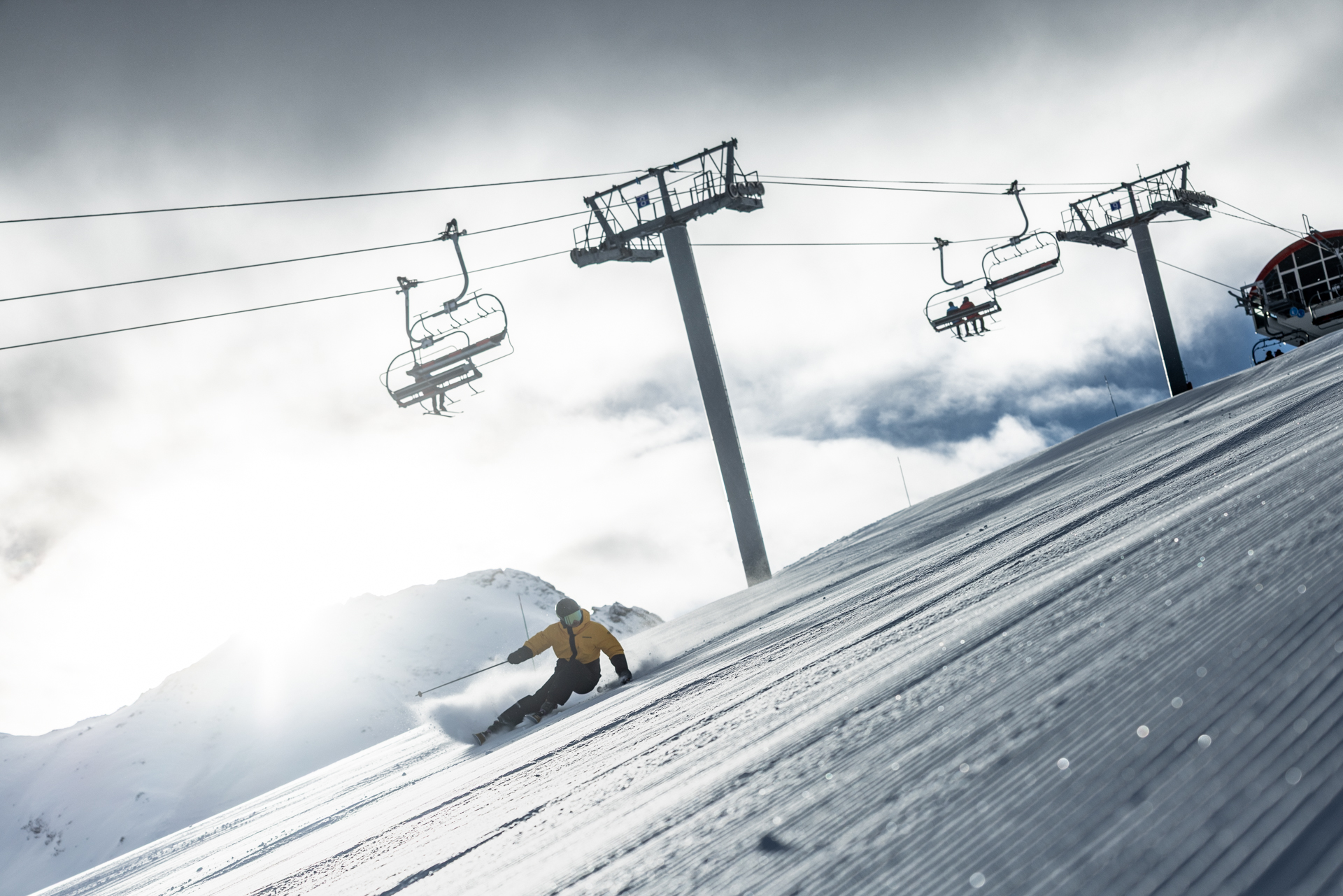
Simply choosing the right skis for the way down the slope is far too easy for us – and most likely for you too. Because passionate winter sports enthusiasts know that with the right technique, skiing is even more fun. What's more, it looks a lot better too! To get the most out of your adventures on the slopes and conquer new terrain, it is advisable to continuously improve your skiing technique.
But what is the most effective way to optimise your skiing technique? The answer lies in three pillars: Firstly, a solid basic position with bent joints and stable posture is important, and secondly, targeted strength and balance training, even off-piste. In addition, systematic training of specific techniques such as carving, short turns or deep snow skiing is also essential. With the right combination of preparation and practical exercises, you can take your skiing technique to the next level.
Before you venture into advanced techniques, you should master the fundamentals, such as correct posture. These form the basis for any improvement in your skiing technique.
An active, dynamic basic position is the key to controlled skiing:
A cardinal mistake made by many skiers is turning their upper body. Instead, the following applies:
One of the most important and often underestimated tips: always look far ahead in the direction of travel, never directly at your ski tips!
Control over your edges is essential:
Practise these basics on wide, gentle slopes before venturing onto more difficult terrain!
Good skiing requires not only mastery of the basics, but also a certain level of physical fitness. With the right preparation, you will not only prevent muscle soreness, but also automatically improve your skiing technique:
Your leg muscles are the engine when skiing:
A strong core keeps your upper body stable:
The be-all and end-all for precise movements:
You need stamina for long days on the slopes: running, cycling or swimming keep you fit and prevent premature fatigue, which leads to poor technique.
Please note that this is only a small selection of possible exercises for ski gymnastics. Depending on your personal level of knowledge, you can integrate your own variations into your preparation, provided they have a positive effect on your leg muscles, core stability and balance. Our recommendation: Start your ski gymnastics 4-6 weeks before the ski season!
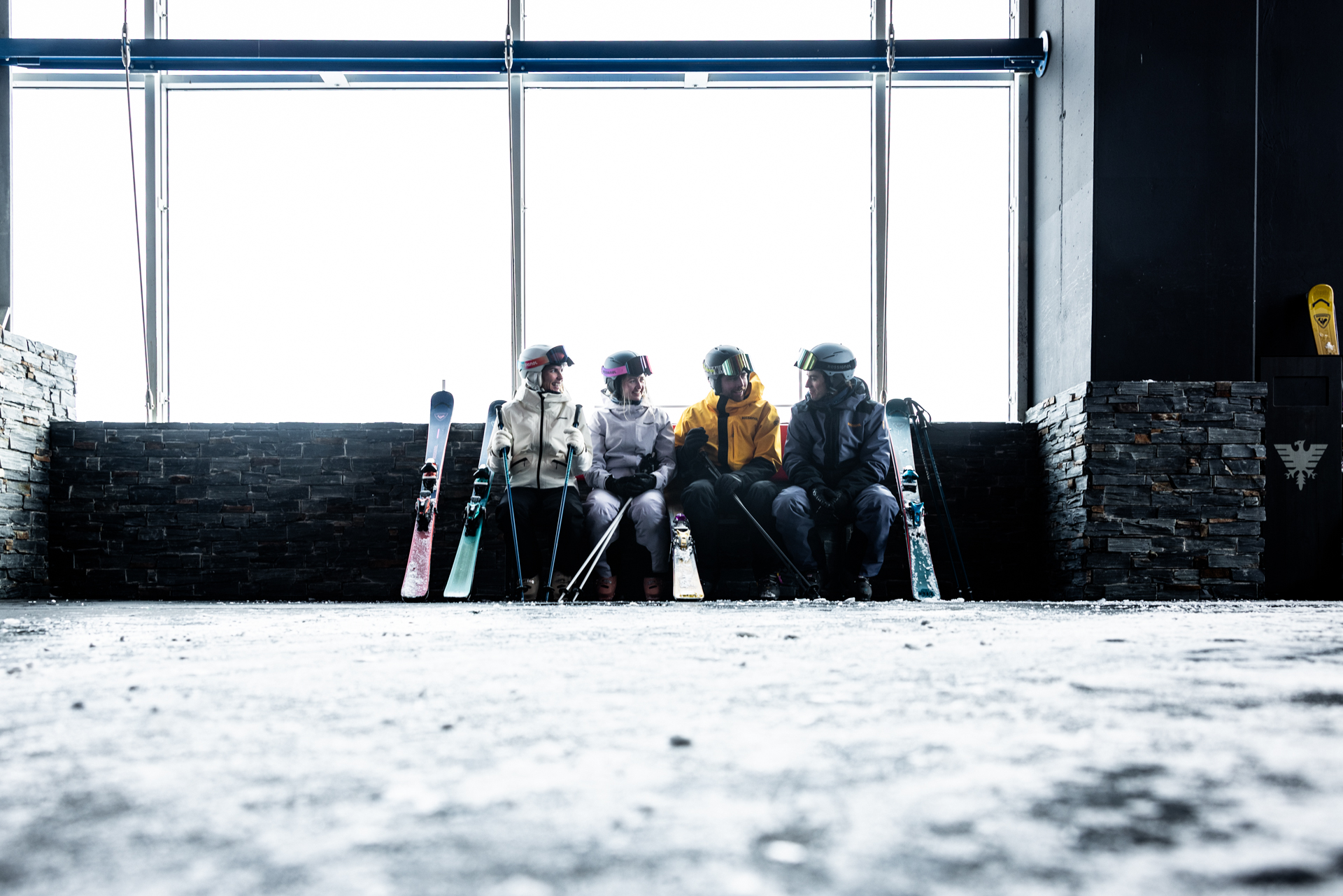
One of the supreme disciplines in skiing is the correct carving technique – for more speed in the turns and pure aesthetics! Here, the skis are edged during the turn so that the curve is cut instead of ‘drifting’. For this reason, there is practically no loss of speed because the braking effect on the edges is significantly lower!
With skis specially designed for this purpose, such as the race carver, which has a radius about ten times the length of the ski, or the all-mountain carver, anyone can now learn this popular technique and take it to the slopes.
Essential for carving is the correct basic position:
From this position, the turn is initiated by putting weight on the inside edge of the outside ski with sufficient speed from the legs. At the same time, your knees, hips and centre of gravity move towards the centre of the turn, performing a tilting movement. Your torso remains straight and should not be twisted.
The rest is simple, because centrifugal force takes care of it! You can easily compensate for the tilt and slipping by shifting your hips towards the slope. This manoeuvre is also known as the ‘banana technique’.
Our tip: To begin with, take a few turns on the edge and then do a few drifting recovery turns!
Carving requires a lot of muscle strength, body tension, good coordination and balance. In order to continuously improve your skiing technique, there are preparatory skiing exercises as well as exercises that you can do directly on the slopes:
In this video you will find more suggestions for your next training session on the slopes! Always adapt the exercises to your skiing ability – for your safety and that of other winter sports enthusiasts.
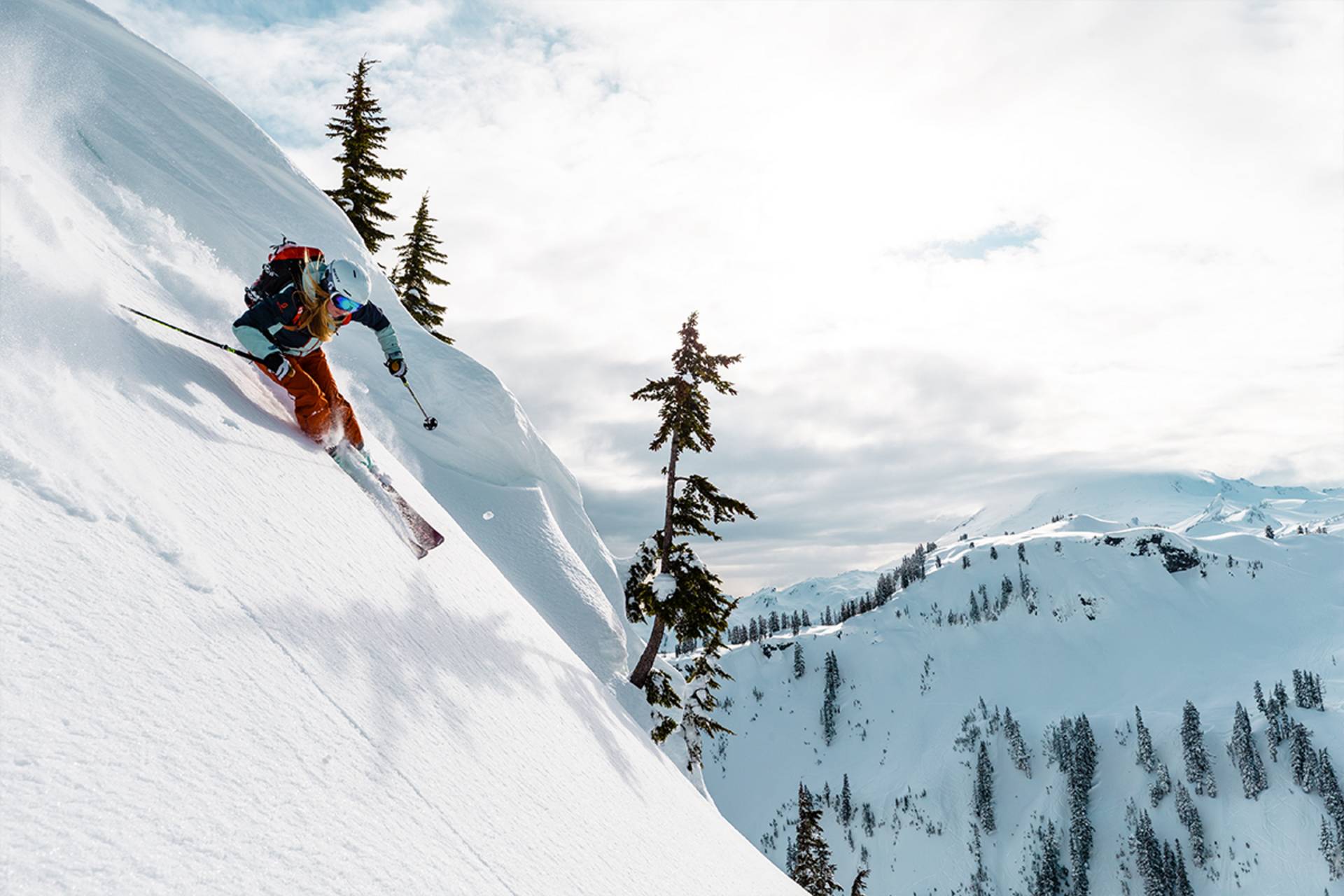
It feels like skiing on cotton wool: fresh powder snow! Many freeriders get their money's worth in deep snow, and the feeling of freedom is truly unique. Technically speaking, deep snow skiing requires a fair amount of experience and is therefore less suitable for beginners.
In contrast to the piste, the snow here is super soft. On the one hand, this has the advantage of providing a natural braking effect, which allows for better speed control. On the other hand, with so much snow, you have to overcome greater turning resistance when making turns. This can quickly become a major challenge.
When ‘powdering’ through deep snow, the skis are always kept very close together to achieve better buoyancy and more control. Special skis designed for deep snow skiing and freeriding can of course provide even better support. Their particularly wide design automatically makes it more difficult to sink in.
It is also important to note that the downhill ski plays a special role: it guides you in deep snow, sets the direction and controls the turn. Also, avoid leaning backwards and always stay in rhythm!
Deep snow skiing demands a lot from you: good balance, a sense of rhythm and the ability to constantly balance your body. That's why exercises with a balance board, for example, are a must if you want to improve this skiing technique!
However, there are also a number of options that you can practise directly on the piste – or on a gentler deep snow slope. It is best to start on gentler terrain before venturing onto steeper slopes:
One more tip: If you have no experience in deep snow, we recommend taking a safety course for off-piste skiing.
As the name suggests, short turns involve turning with a very small radius. There are several differences compared to carving: a faster rhythm, more precise pole use, quicker movements, a braking drift component, stronger leg rotation, skiing in the fall line and, in some cases, greater effort are necessary to improve this skiing technique.
Advantage: This makes it easy to flexibly adjust the turn radius and adapt to the conditions of the slope. This is precisely why the short turn is also the best option for mastering steep slopes, narrow passages and drag paths without risk.
The body's centre of gravity should be slightly above the ski so that the shin is pressed against the ski boot. This makes it easier to turn the skis because just before the turn, you stretch your legs and your toes build up pressure. Then the rocker of the ski should initiate the turning movement in the snow.
The legs are bent and pressure is applied with the whole sole of the foot to turn the skis. The torso remains stable and only the legs swing back and forth.
Finally, you apply pressure to the end of the ski and put weight on the downhill ski – short turns require a great deal of strength and concentration.
Improving this skiing technique requires a lot of muscle strength and stamina. It is therefore particularly important to incorporate ski gymnastics, strength training and endurance training into your regular workout!
However, there are also exercises for short turns that you can do directly on the slopes:
Even though it may look like you are standing on skis for the first time, these exercises can help you improve your short turn technique.
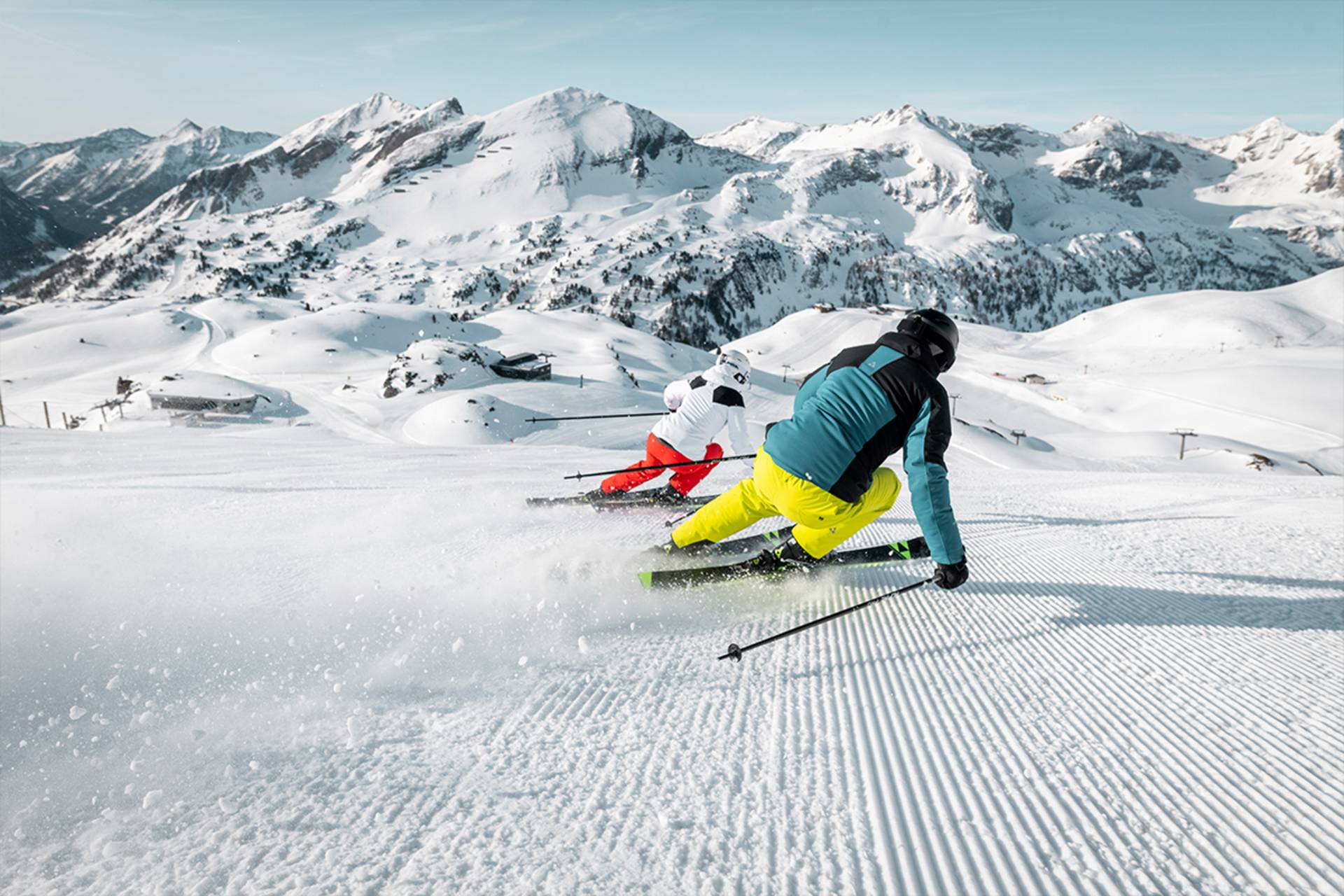
Black runs are not for the faint-hearted: avoided by some, loved by adrenaline junkies. The descent into the valley is made a little easier by placing extra pressure on the outside ski – the magic word here is: edge control!
The difficulty lies in the speed, which can only be truly controlled by a large angle between the slope and the ski edge. Placing a particularly high load on the downhill ski allows you to glide even over disruptive ice surfaces.
Improving your skiing technique is a continuous process: start with the basics, build up strength and balance, and then venture into advanced techniques such as carving, short turns or deep snow skiing. Sometimes it is also advisable to seek professional coaching. An experienced ski instructor can spot mistakes that you would never notice yourself and can provide you with targeted help.
With patience, the right exercises and perhaps the support of a ski professional, you will find that your skiing technique becomes increasingly confident and effective.
Are you now keen to try out one of these skiing techniques and improve your skills? Then rent a race carver or extra-wide skis for deep snow skiing conveniently from
There are some particularly effective tools, such as video analysis. When you see yourself skiing, you can immediately identify where you need to improve (posture, turning, edge control). Many ski schools already offer professional video sessions. Smart gear and sensors are perfect for tech-savvy skiers: systems such as Carv, with sensors in your ski boots, give you real-time feedback on pressure distribution and edge angles directly through your headphones. And, of course, professional coaching or specialised courses: the trained eye of a ski instructor or a technique camp in a glacier ski area can often help you make significant progress in a very short time.
The classic: leaning back! Many skiers lean back too far, which makes it much more difficult to control the skis. This prevents you from controlling the edges properly and you lose precision. Another mistake: the upper body turns with you instead of remaining stable. Make sure that your weight is centred over your skis and that only your legs are doing the work. Eye contact is also often underestimated – if you look at the tips of your skis instead of looking ahead, you will automatically ski less confidently. These three points alone can greatly improve your technique!
That depends largely on your starting level and how often you practise! If you train regularly, skiing 2-3 days a week, you will see significant progress in the basics, such as balance and edge control, after just a few weeks. Advanced techniques, such as clean carving or perfect short turns, take longer – you should expect to spend a whole season on these. The key lies in the combination of targeted training on the slopes and fitness preparation off the slopes. With professional support from a ski instructor, you will often progress much faster!
Was your question not answered? Feel free to use our contact form to send us a message.