Two skis, two poles, a helmet and warm winter clothing – that's all you need for a skiing adventure. Well, not quite, because you also have to decide on the right place where you can enjoy the sport to the fullest. More and more people are discovering freeriding for themselves and are on the lookout for ski resorts that offer this type of skiing. But what exactly is freeriding and what do you need to bear in mind? This blog post provides all the important answers. It also offers technical tips so that even beginners can quickly get the hang of it. And we reveal the best ski resorts in Austria for freeriding.
What is freeriding?
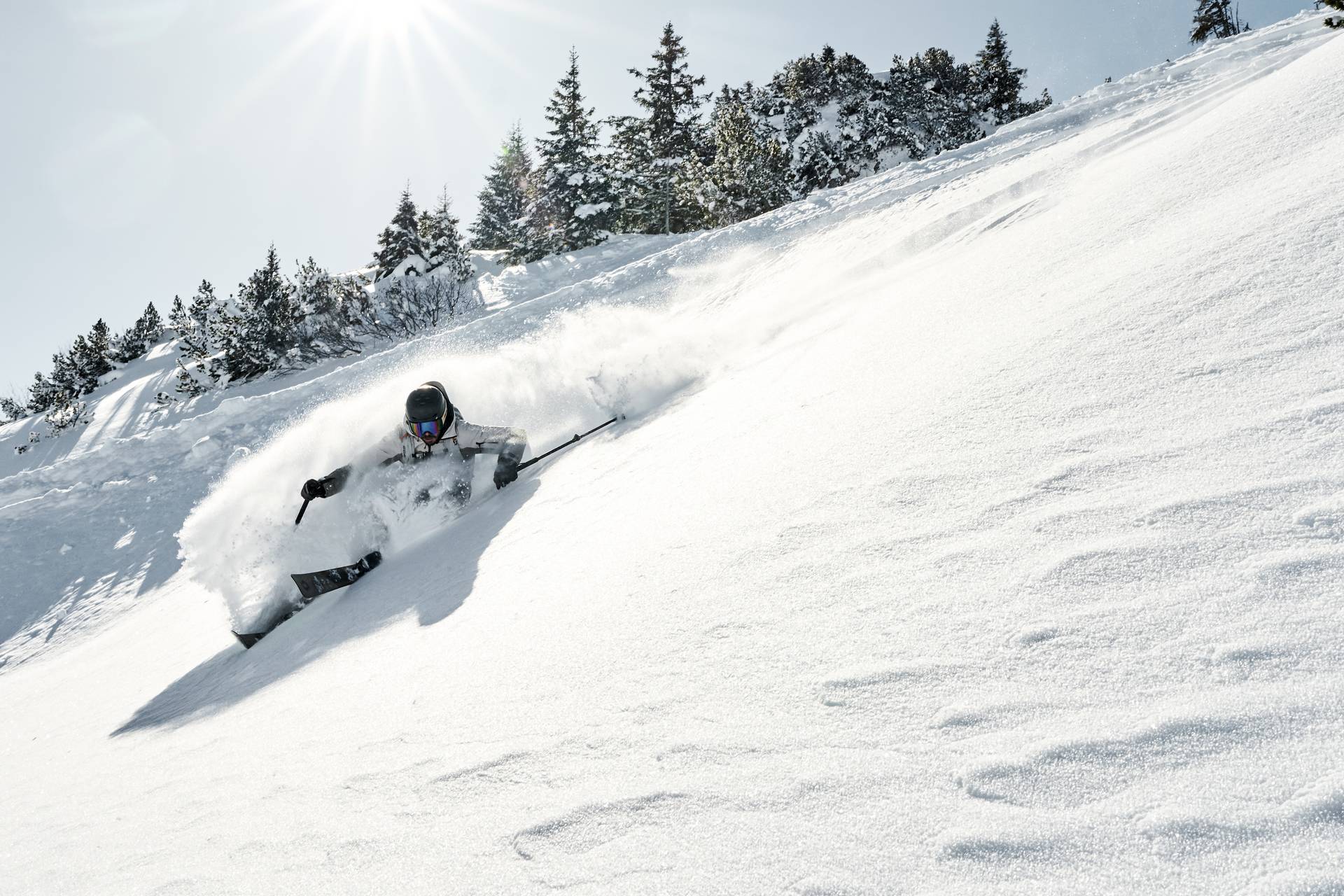
Freeriding is nothing more than deep snow skiing. It means skiing in a ski resort away from the marked slopes and instead using the open terrain for winter sports. This means you forego groomed snow as well as signs and safety measures such as nets or boundary elements. In addition, unpredictable obstacles such as branches or stones may appear under the snow cover, which you will have to overcome. But it is precisely this thrill, combined with the tranquil natural backdrop, that appeals to many.
Deep snow enthusiasts often describe freeriding as a unique experience that not only floods the body with adrenaline, but also promises magical moments in untouched nature, far away from the hustle and bustle of the slopes. But what looks easy requires profound technical know-how, the right freeriding technique, and alpine knowledge in order to correctly assess the conditions and move safely through the deep snow.
Freeriding for beginners: what you need to know
If you've got a taste for it now, you might be wondering: freeriding for beginners – how does it work? Well, there are a few things you should bear in mind to get the most out of this type of skiing while minimising the potential risks.
Our tips for newbies:
- Take a freeriding course: If you want to be on the safe side, don't rush out onto open terrain on your own, but let experts show you everything you need to know about deep snow skiing and the right freeriding technique.
- Learn about avalanches: It's not just about skiing know-how, but also about being able to react correctly in an avalanche emergency. There are also special courses for this, which are a basic requirement for this adventure.
- Check the weather: Before planning a day of freeriding, you should always keep an eye on the current weather conditions in the mountains, as poor conditions have a direct impact on visibility and snow.
- Check your equipment: Digital maps and GPS devices help you find your way off-piste, and a first aid kit can be essential in an emergency. In addition to skis, ski poles, helmet, goggles and ski clothing, you will also need: an avalanche transceiver, shovel and probe, avalanche backpack, crampons or ice axes, gaiters. When it comes to skis, deep snow skis are long and wide so that they do not sink as deeply and float faster. Sometimes the ski or part of it is also curved upwards to improve buoyancy.
- Do you still need the right equipment? At SPORT 2000 rent, you will find a wide range of products for every application.
- Respect nature: Amidst all the excitement, don't forget the animals and plants that live where you are skiing. Respect the flora and fauna and pay attention to designated protected areas.
- Don't rush into anything: The most important thing is to be able to assess your own abilities correctly and not to overestimate yourself. To begin with, tours in flat areas are a good idea, then you can slowly work your way up to steeper slopes.
- Never go out alone: Skiing in deep snow in the mountains all by yourself? Not a good idea! Go out into open terrain in groups of at least two, or better still in larger groups, so that you can react more quickly in an emergency.
Occasionally, there are also yellow slopes in ski resorts that you can use. These are runs that are already protected from avalanche danger but are otherwise still largely unprepared. They are ideal for practising deep snow skiing before venturing into unsecured terrain.
The right freeriding technique: 4 tips
Our four technical tips will also help you get started with your new favourite pastime – making freeriding a fun and safe experience:
During regular skiing, your centre of gravity should always be directly above your bindings – in other words, neither too far forward nor too far back. The same applies to freeriding. You should also ensure that your upper body is stable and your legs are close together.
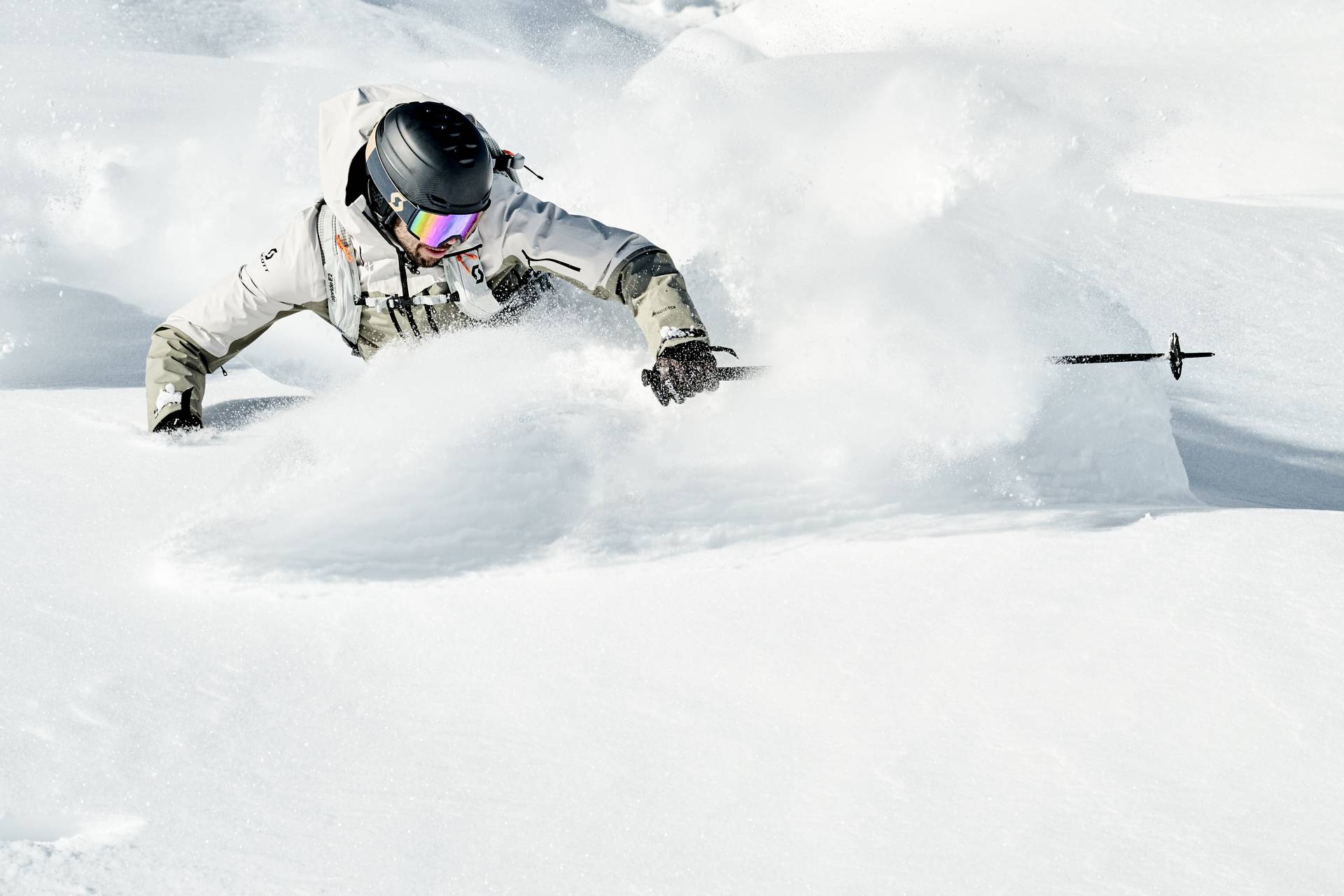
Some freeriders say that skiing in deep snow is like flying. And indeed, it can give you a feeling of weightlessness. This is mainly because the skis float in the deep snow due to buoyancy, the faster you ski. This also makes them easier to turn on the surface. However, this effect does not occur at low speeds, making it more difficult to control the skis.
Dancers need a sense of rhythm – freeriders too. Because only with the right timing and pole use, as well as controlled wrist movements, can you master the turns effortlessly. If you find this difficult at first, you can remind yourself to change turns with short commands to get into the flow.
If you put too much weight on one ski, it may suddenly sink into the snow. The result: it becomes more difficult to steer the skis. To prevent this from happening, the weight should always be distributed evenly when skiing in deep snow.
Advanced skiers can also take advantage of the trampoline effect, also known as the rebound effect: if you focus on the right rhythm and active up and down movement, i.e. stretching and bending your hips, knees and ankles, you will sometimes jump a little into the air before the turn – just like on a trampoline. The reason: active weight-bearing compresses the snow and triggers this effect. This makes it easy to turn the skis for the appropriate change of direction.